PH and Lipid Barrier

Is Your Skin Too Alkaline? How pH Affects Eczema, Irritation, and the Skin Barrier

Why Skin pH Matters

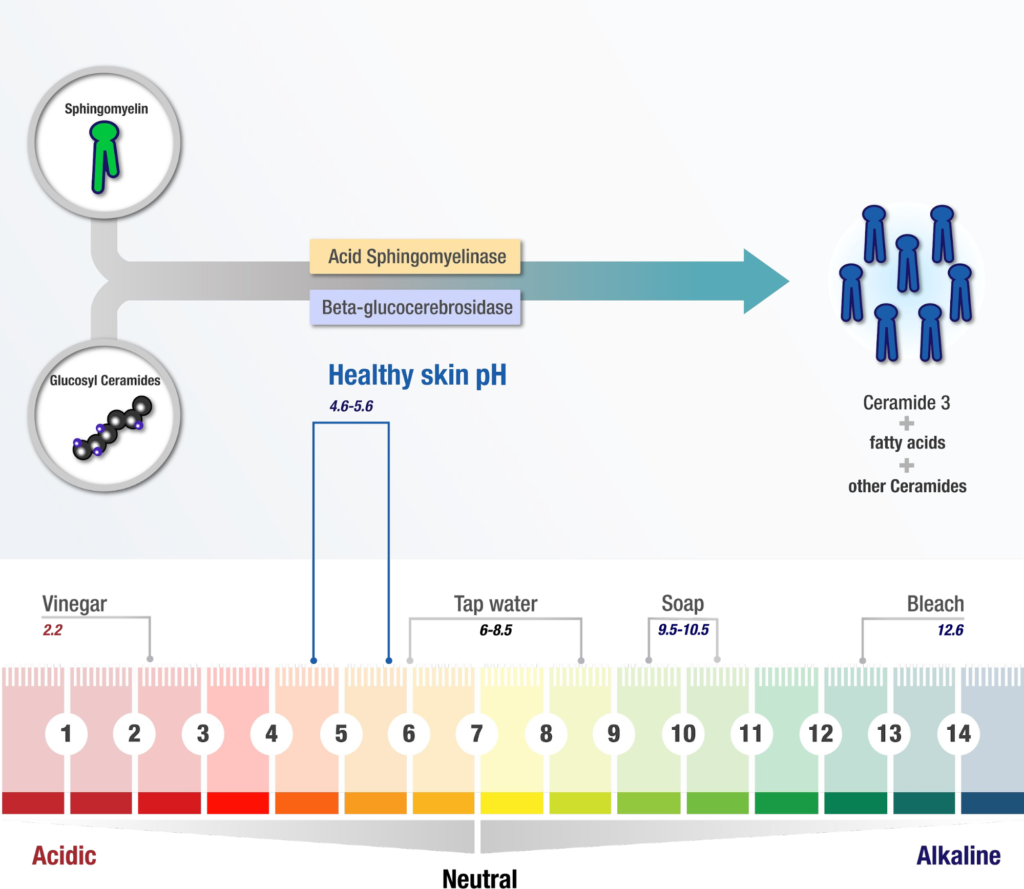
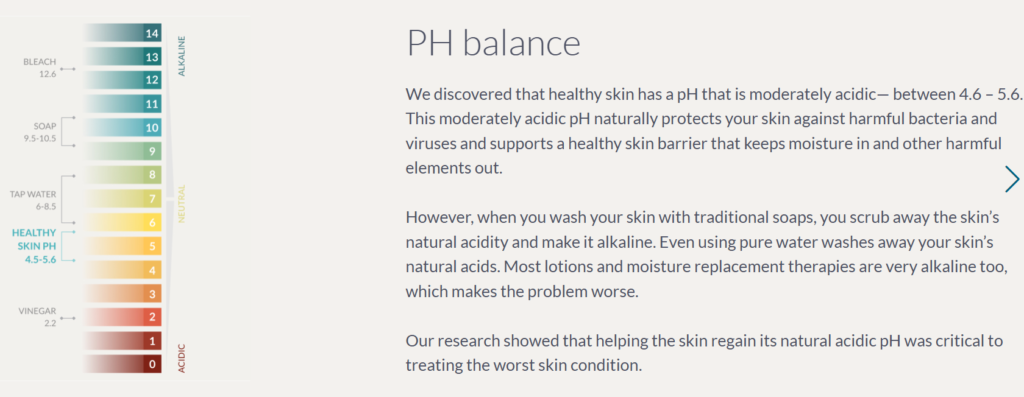
Healthy skin is slightly acidic (pH 4.6-5.6). This natural acidity protects the barrier
and keeps inflammation under control.


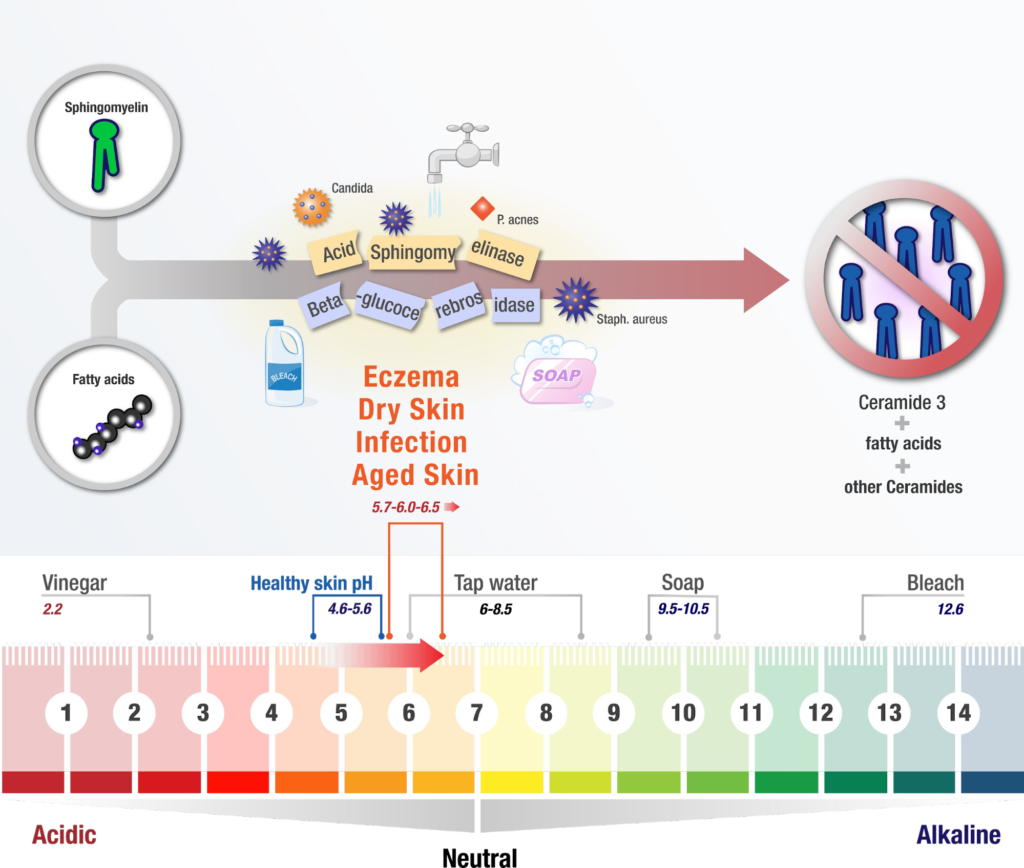
When the skin becomes too alkaline:

  • Skin enzymes (KLK5) become overactive
  • Protective lipids break down
  • Moisture levels drop
  • Water loss increases (TEWL)
  • Itching and redness worsen
  • Eczema flares develop

Alkaline skin can also activate an allergic-type immune response that contributes to
long-term eczema progression (the atopic march).


Keeping the skin layer slightly acidic helps the barrier stay strong and calm.
 

Skin Lipid layer under different PH Conditions
The Science of Skin Barrier Repair
Why Healthy Skin Starts With the Barrier

Healthy skin depends on a strong, balanced skin barrier. This outer protective layer keeps moisture inside the skin while blocking irritants, allergens, and inflammation from entering.

When the barrier is damaged, skin cannot regulate hydration or defend itself properly. This leads to dryness, itching, sensitivity, redness, and chronic conditions like eczema.

What the Skin Barrier Is Made Of

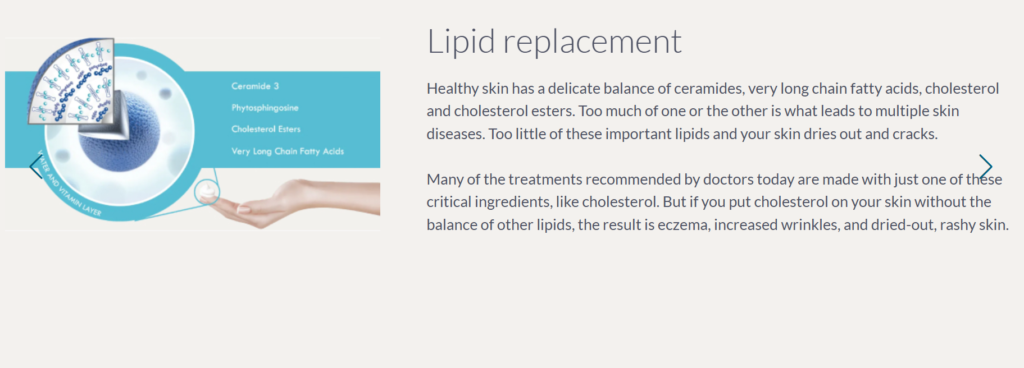
The barrier is not just “moisture” — it is a highly organized lipid structure. In healthy skin, barrier lipids are composed approximately of:

  • Ceramides — 47%
  • Cholesterol — 24%
  • Cholesterol esters — 18%
  • Free fatty acids — 11%


For optimal function, these lipids work best in a physiologic 3:1:1 ratio of ceramides : free fatty acids : cholesterol — the same ratio found naturally in human skin.

Simply adding hydration or heavy oils does not repair the barrier. In fact, excess or unbalanced lipids can delay healing.


Moisturizing vs True Barrier Repair

Many products only coat the surface of the skin. They temporarily soften the skin but do not rebuild the structure.

Real barrier repair requires replacing the exact components the skin is missing.

Key repair molecules

  • Ceramides
  • Phytosphingosine
  • Very long-chain fatty acids
  • Cholesterol esters

These ingredients rebuild the lipid architecture rather than just covering it.

The “3:1:1 Ratio” Misunderstanding

Many products advertise a “3:1:1 lipid ratio.”

However, most skin diseases are not caused by simple imbalance — they are caused by specific lipid deficiencies.

In eczema, aging skin, and chronic dry skin, critical molecules such as phytosphingosine and long-chain ceramides are reduced or absent.

Effective therapy replaces what is missing, not just what sounds balanced.

What Happens When the Barrier Is Restored When the correct lipids are replaced:

  • Water loss decreases
  • Irritation drops
  • Itching improves
  • Inflammation calms
  • Skin becomes more tolerant
  • Flares become less frequent


This is long-term healing — not temporary moisturization.

Our Approach at Aesthetics and Medical Lasers of Colorado – Dermatology

We focus on repairing skin from its foundation outward:

  • Restoring normal skin pH
  • Supporting natural lipid regeneration
  • Calming inflammation
  • Preventing flare-ups
  • Creating personalized barrier-repair plans

Our goal is not short-term relief — it is rebuilding strong, resilient skin.

At Aesthetics and Medical Lasers of Colorado – Dermatology, we provide comprehensive evaluation and personalized treatment for alopecia areata and other hair disorders.

📍 Longmont Office
1350 Tulip Street, Suite 2
Longmont, CO 80501

📍 Fort Collins Office
2801 Remington Street, Suite 2
Fort Collins, CO 80525

📞 Call us today: 720-818-0533 Schedule your consultation and take the first step toward healthier, fuller-looking hair.

Popular Blog

  • What are syringomas?
  • Does sweat harm your skin
  • PH and Lipid Barrier
  • Glomus Tumor
  • Alopecia Areata
  • Female Pattern Hair Loss
  • Locations

    700 Tenacity Drive #102 Longmont, Colorado, 80504

    2801 Remington Street Suite 2, Fort. Collins, Colorado, 80525

    Contact

    720-818-0533