Alopecia Areata

Alopecia Areata (AA)

What Is Alopecia Areata?

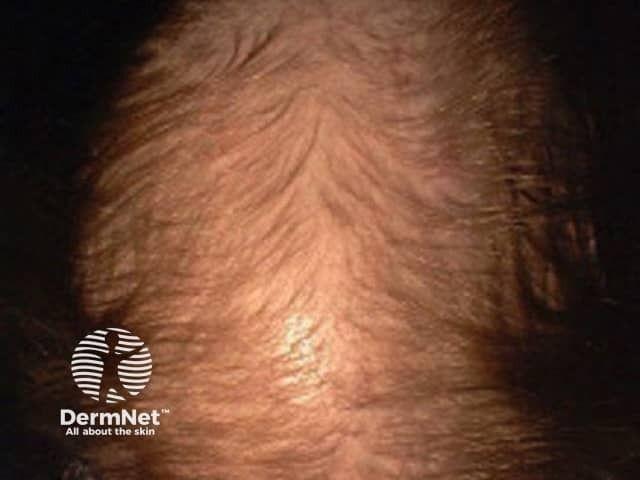
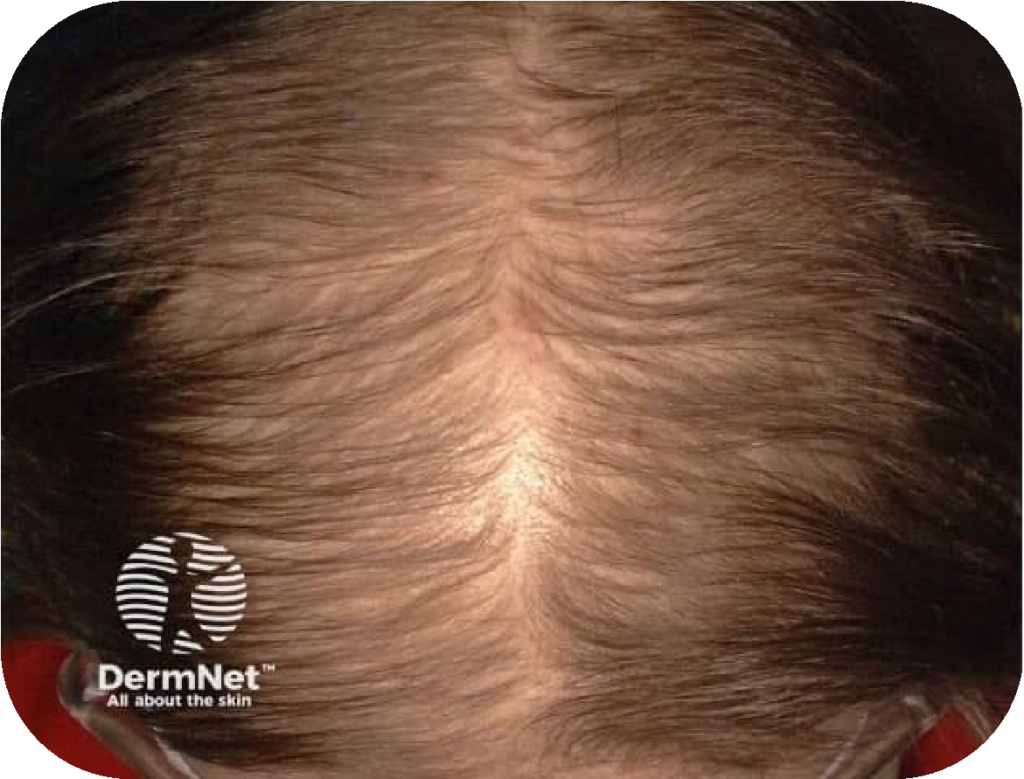
Alopecia areata is an autoimmune condition in which the immune system attacks hair follicles, causing sudden patchy hair loss. The hair follicle remains alive and intact, which means regrowth is possible. It can affect the scalp, beard, eyebrows, eyelashes, or body hair. It occurs in both males and females and can begin at any age.

Who Gets It?

About 1.7–2% of people develop alopecia areata during their lifetime. It most commonly begins in childhood/teen years or in the mid-30s. Around 10–25% of patients have a family history. It is not contagious and is not caused by hair products or hygiene.

How Is It Diagnosed?

Diagnosis is usually made by examining the scalp. Typical findings include smooth, round bald patches without redness or scaling. Special magnified scalp evaluation (trichoscopy) may show “exclamation point hairs,” yellow dots, or broken hairs. A biopsy is rarely needed unless the diagnosis is unclear.

Conditions That Can Look Similar

Other causes of hair loss may need to be ruled out, including fungal infections (tinea capitis), hair pulling (trichotillomania), androgenetic (pattern) hair loss, telogen effluvium (stress shedding), syphilitic alopecia, and scarring alopecia.


Associated Autoimmune Conditions

Alopecia areata can occur alongside other immune-related conditions, especially autoimmune thyroid disease (such as Hashimoto’s). It may also be associated with vitiligo, type 1 diabetes, celiac disease, lupus, rheumatoid arthritis, pernicious anemia, and atopic dermatitis.


Do I Need Lab Testing?

Not everyone needs blood work. Testing is guided by symptoms, age, and medical history.

When appropriate, labs may include thyroid testing (TSH, Free T4, thyroid antibodies), complete blood count, ferritin (iron stores), vitamin D, and zinc. Additional tests for celiac disease, autoimmune thyroiditis, pernicious anemia, or rheumatologic conditions are ordered only if symptoms suggest them. Routine hormone panels or heavy metal testing are not recommended unless there is a specific reason.

Labs are more strongly considered if hair loss is sudden, extensive, recurrent, associated with nail changes, or if there are other autoimmune symptoms.


Types of Alopecia Areata

Patch-type AA is the most common and appears as smooth bald spots. Alopecia totalis causes complete scalp hair loss. Alopecia universalis causes loss of all scalp and body hair. Ophiasis causes band-like hair loss along the sides and back of the scalp and may be more resistant. Sisaipho is the reverse pattern.

Treatment Options

Treatment depends on how much hair loss is present and how quickly it is progressing.

For small patches, steroid injections every 4–6 weeks are often the most effective treatment and may stimulate regrowth within months.

For larger areas, topical immune therapy may be used to redirect the immune response.

If hair loss is spreading rapidly, a short course of oral steroids may help slow progression.

For extensive scalp or body hair loss, newer medications called JAK inhibitors — such as baricitinib (Olumiant) — can be effective. These require monitoring because they affect the immune system.

Supportive treatments such as topical steroids, minoxidil, or other prescription therapies may also be used.

Prognosis

Because the follicles remain intact, many patients experience regrowth — sometimes even without treatment. Early evaluation improves outcomes. Extensive disease or nail involvement may suggest a more chronic course.


When to Seek Evaluation

You should seek evaluation if you notice sudden patchy hair loss, eyebrow or eyelash thinning, nail pitting, recurrent episodes, or symptoms of other autoimmune conditions.

At Aesthetics and Medical Lasers of Colorado – Dermatology, we provide comprehensive evaluation and personalized treatment for alopecia areata and other hair disorders.

📍 Longmont Office
1350 Tulip Street, Suite 2
Longmont, CO 80501

📍 Fort Collins Office
2801 Remington Street, Suite 2
Fort Collins, CO 80525

📞 Call us today: 720-818-0533 Schedule your consultation and take the first step toward healthier, fuller-looking hair.

Popular Blog

  • What are syringomas?
  • Does sweat harm your skin
  • PH and Lipid Barrier
  • Glomus Tumor
  • Alopecia Areata
  • Female Pattern Hair Loss
  • Locations

    700 Tenacity Drive #102 Longmont, Colorado, 80504

    2801 Remington Street Suite 2, Fort. Collins, Colorado, 80525

    Contact

    720-818-0533