Koenen Tumor (Periungual Fibroma)
A Koenen tumor, also known as a periungual fibroma, is a benign angiofibroma that develops around the nail folds. It is strongly associated with tuberous sclerosis complex (TSC) and occurs in about 50–80% of adults with the condition.
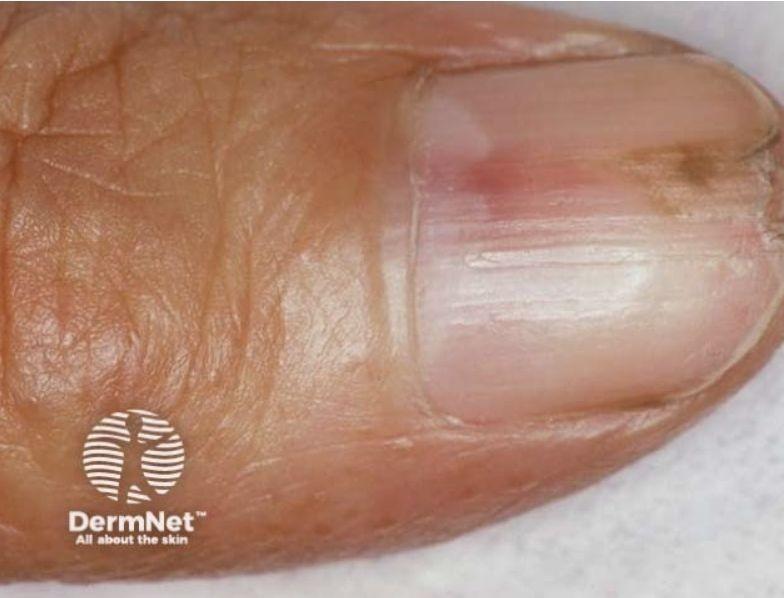
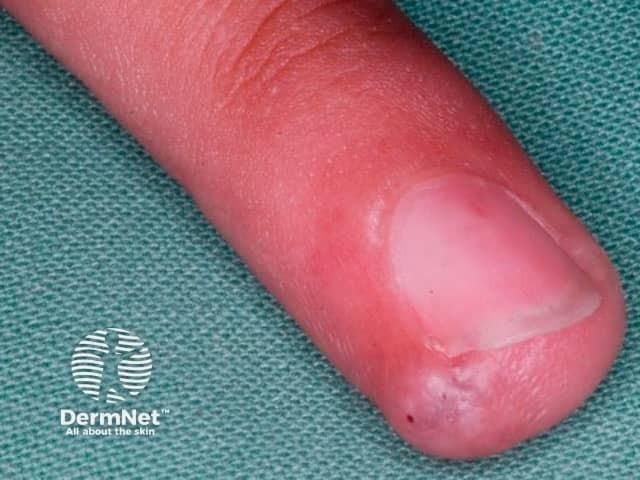
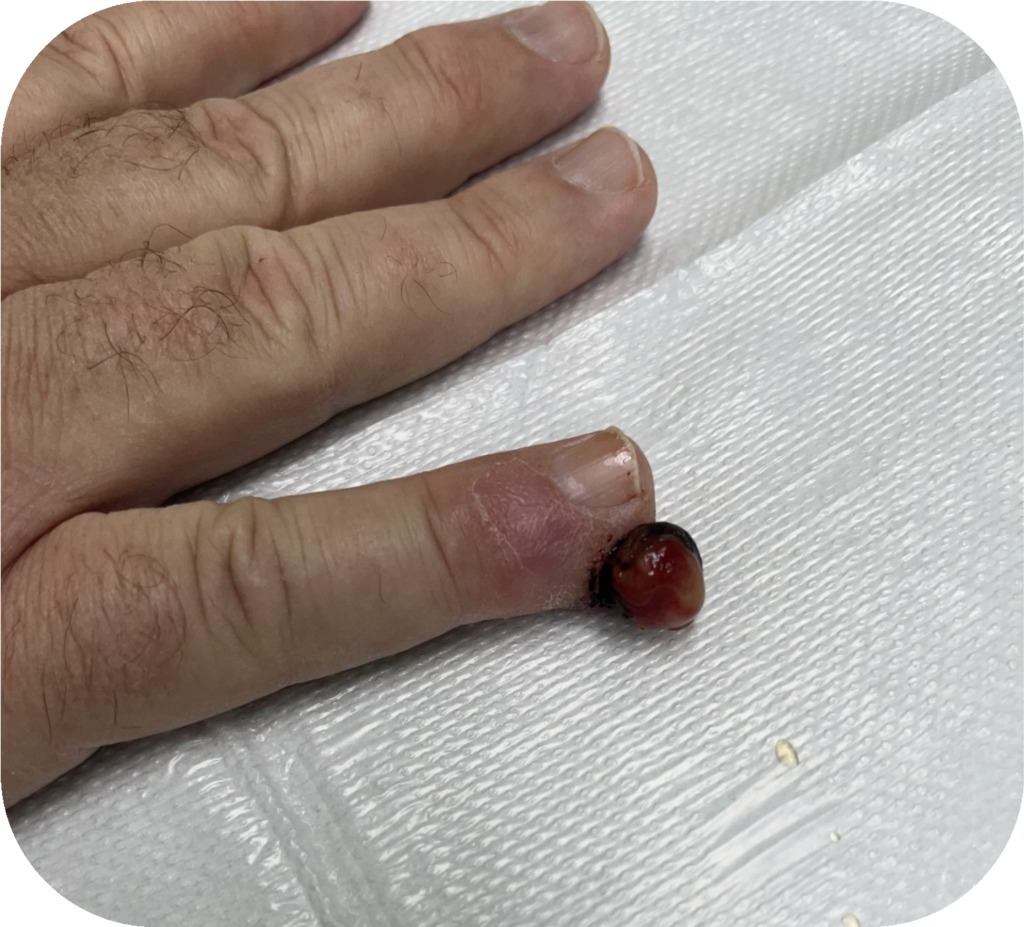
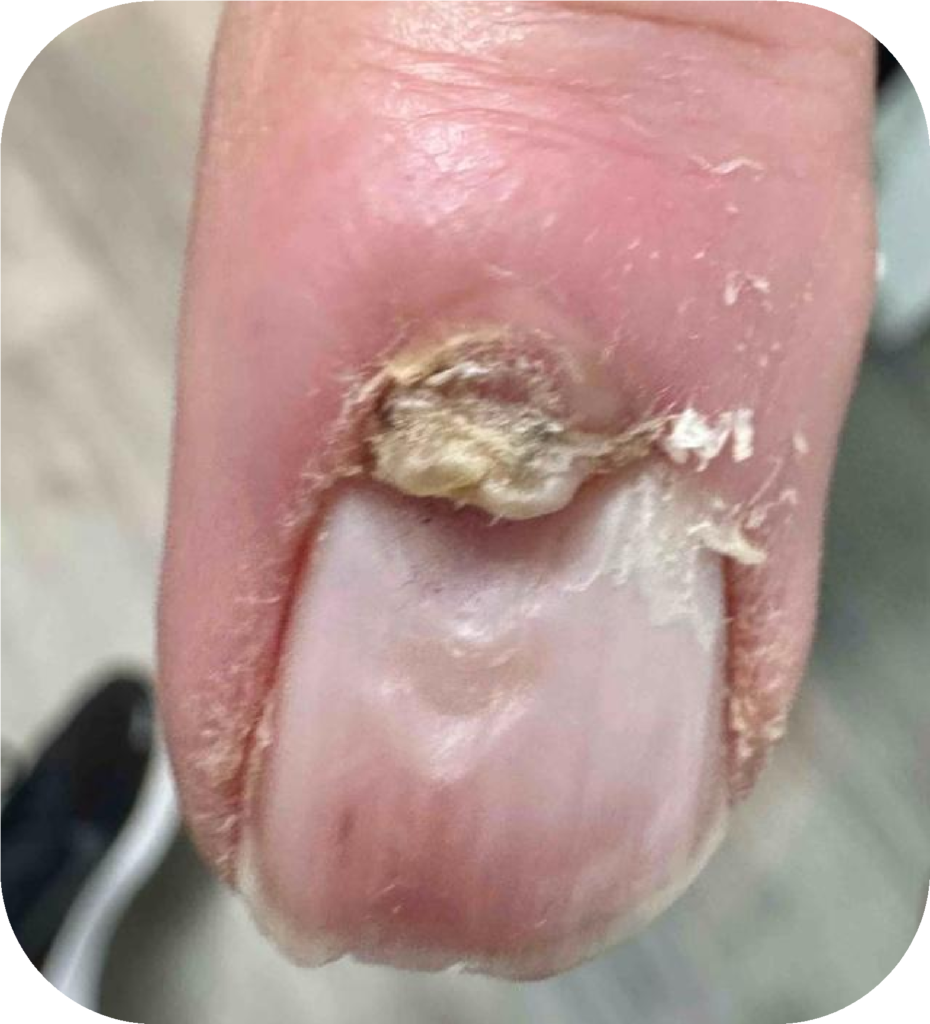
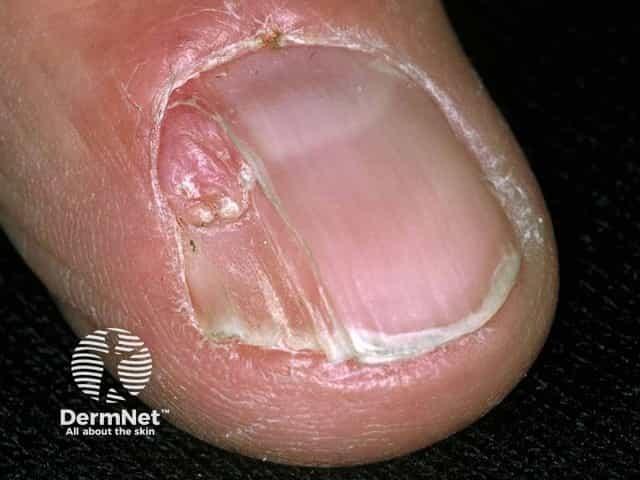
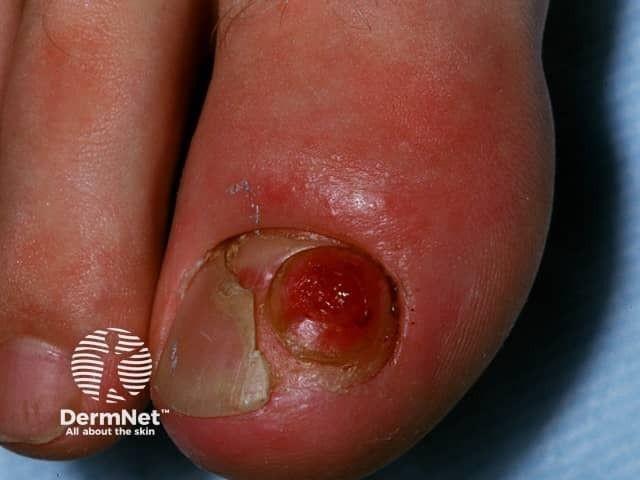
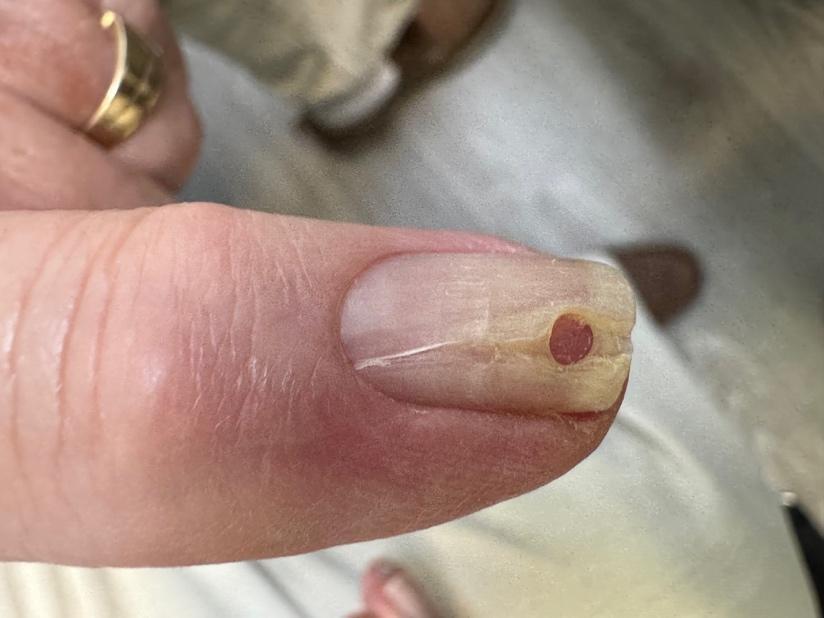
Clinically, these lesions appear as firm, smooth, skin-colored to pink nodules around the periungual or subungual nail folds. They are often multiple and may distort the nail plate, causing longitudinal grooves, ridging, or onycholysis. Koenen tumors usually develop around puberty and increase in number with age. Although often asymptomatic, they may bleed, become painful, or be easily traumatized.
Because of their strong association with tuberous sclerosis, patients should be evaluated for other features such as facial angiofibromas, hypomelanotic macules (“ash-leaf spots”), shagreen patches, seizures, and developmental delay. Diagnosis is usually clinical, though histology shows fibrous tissue with dilated vessels and spindle-shaped fibroblasts.
Treatment options include simple excision, shave removal, electrocautery, or laser ablation (CO₂ or pulsed-dye laser). Recurrence may occur if lesions are not completely removed. In patients with tuberous sclerosis, mTOR inhibitors such as sirolimus may help reduce lesion size.
Clinical pearl: Multiple periungual fibromas in an adolescent or adult should raise strong suspicion for tuberous sclerosis complex.